
Introduction
“Until the lion learns to write, every story will glorify the hunter.” – African Proverb
For decades, Africa’s cultural richness was largely under-celebrated on the global stage. But today, a rhythmic revolution is rewriting that narrative. Afrobeats, born from the vibrant streets of West Africa—particularly Nigeria and Ghana—has become Africa’s loudest cultural export to the world. From Lagos to London, Accra to Atlanta, Afrobeats is not just a sound; it is a movement, a message, and a mirror reflecting Africa’s creative brilliance.
Discussion
- The Rise of Afrobeats: A Homegrown Phenomenon
Afrobeats (not to be confused with Fela Kuti’s Afrobeat of the 1970s) is a fusion genre that blends traditional African rhythms, highlife, hiplife, dancehall, hip-hop, and R&B. It emerged in the early 2000s but began to gain serious international traction in the 2010s.
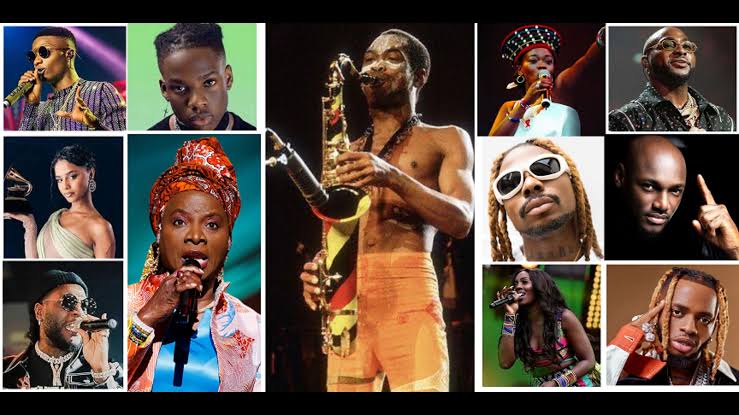
Artists like D’banj, 2Baba, and P-Square laid the foundation, but it was the likes of Wizkid, Davido, Burna Boy, Tiwa Savage, and Tems who took it global. According to Spotify’s 2023 data, Afrobeats streams grew over 550% outside Africa in just five years, a clear testament to its global magnetism.
- From Lagos to the Grammys: Afrobeats on Global Platforms
In 2021, Burna Boy won a Grammy for Best Global Music Album, a major win for the genre. Wizkid’s “Essence” featuring Tems became the first Nigerian song to break into the Billboard Hot 100 Top 10, earning critical acclaim and remix features with artists like Justin Bieber.
Now, international stars like Drake, Beyoncé, Ed Sheeran, and Chris Brown collaborate frequently with Afrobeats artists, embedding African rhythm into mainstream music.
Even major events—FIFA World Cup, the NBA All-Star Weekend, and Netflix soundtracks—have featured Afrobeats, marking its deep cultural penetration.
- More Than Music: A Cultural Force
Afrobeats is not just sound—it’s identity. With its infectious beats and bilingual lyrics (often blending Pidgin, Yoruba, English, and more), it represents African pride, resilience, and swag.
Through fashion, music videos, dance challenges, and slang, Afrobeats has introduced global audiences to African lifestyle and aesthetics. The success of songs like “Calm Down” by Rema or “Ku Lo Sa” by Oxlade has sparked TikTok dance trends, fashion lines, and even tourism boosts to Nigeria and Ghana.
As Vice Magazine noted in 2023, Afrobeats has become a “cultural passport” for Africa’s youth, giving them global visibility and ownership of their narrative.
- Economic Impact: Jobs, GDP, and Global Markets
According to PwC Nigeria, the Nigerian music industry—largely driven by Afrobeats—contributed over $60 million to the country’s GDP in 2022, with potential to triple by 2030.
Afrobeats has birthed record labels, fashion brands, event companies, and streaming startups, creating thousands of jobs. Boomplay, Audiomack, and Mavin Records are now regional powerhouses. African artists are signing multi-million-dollar international deals while retaining homegrown influence.
Streaming platforms like Spotify, Apple Music, and YouTube now prioritize African markets, recognizing Afrobeats as a key driver of global music consumption.
- Challenges in the Spotlight
Despite its success, the industry faces challenges:
- Copyright theft and royalty mismanagementremain persistent.
- Infrastructure issues—from poor studio quality to limited concert venues—limit growth.
- Censorship and government crackdownson expressive content threaten creative freedom.
Moreover, there is growing concern that corporate Western influence might dilute the genre’s authenticity. Critics argue that Afrobeats should not lose its roots in African storytelling and consciousness in the pursuit of commercial appeal.
- The Future: Can Afrobeats Sustain Its Global Run?
If nurtured well, Afrobeats could become Africa’s version of K-pop or Reggaeton—a genre that builds global influence while retaining cultural purity.
Initiatives like Afrobeats Academy, music education in schools, and Pan-African collaborations are already helping preserve its soul while expanding its reach.
Nations like Ghana and Nigeria are now including creative industries in economic plans, realizing that music is soft power—and Afrobeats is a diplomatic tool that no embassy could replace.
Conclusion
“When the music changes, so does the dance.” – African Proverb
Afrobeats is not merely Africa’s sound—it is her roar, echoing through global airwaves with the rhythm of hope, resilience, and rebirth. In a world often quick to define Africa through poverty and conflict, this genre offers a counter-narrative: of creativity, youth, and unshakable pride.
As Afrobeats continues to conquer charts and hearts globally, the challenge is to maintain authenticity while evolving, to protect the artists and ecosystems that birthed it, and to ensure Africa’s cultural wealth is respected, celebrated, and equitably shared.
With the beat strong and the world listening, Africa has never sounded more alive.
NOAH AJARE ESQ