
Introduction
“Even the sun does not forget its own people.” – African Proverb
Africa is bathed in sunshine almost year-round, with some of the highest solar irradiation levels in the world. Yet, paradoxically, over 600 million Africans still live without access to reliable electricity (IEA, 2023). This contradiction raises the question: why isn’t Africa leading the global solar revolution? In a world racing toward renewable energy and away from fossil fuels, Africa has a golden opportunity to skip the carbon-intensive phase of industrialization and leap straight into a sustainable, solar-powered future. But can the continent overcome the financial, infrastructural, and political barriers standing in the way?
Discussion
Africa’s solar potential is staggering. Countries like Namibia, Chad, Niger, and Sudan receive more than 3,000 hours of sunshine per year, making them ideal candidates for utility-scale solar farms. According to the International Renewable Energy Agency (IRENA), tapping just 0.3% of the Sahara Desert’s sunlight could power the entire continent. That’s not just a dream; it’s science-backed possibility.
However, while the sun shines freely, access to financing doesn’t. Solar energy projects across Africa are often stifled by a lack of investment-friendly regulatory frameworks, high upfront costs, and limited energy infrastructure, particularly in rural areas. Despite efforts like the Desert to Power initiative by the African Development Bank, implementation is slow, and bureaucratic bottlenecks persist.
Yet, there’s growing momentum. Countries such as Morocco (with its massive Noor solar complex), South Africa, Egypt, and Kenya have made substantial progress in solar deployment. Private ventures are also making headway. For instance, d.light and M-KOPA are providing pay-as-you-go solar kits that are lighting up homes in off-grid communities across East and West Africa.
Moreover, solar power offers more than just electricity—it offers economic liberation. It powers irrigation for farmers, fuels cold chains for vaccines, and lights up classrooms for evening studies. As noted by the UNDP (2024), access to energy is directly linked to improvements in health, education, and income generation.
An African proverb says, “He who is destined for power does not have to fight for it.” Africa’s power lies above its head. What’s needed is the political will, regional cooperation, and smart investment to unlock it.
Additionally, the global push for energy transition presents Africa with a strategic advantage. Western nations, looking to meet their net-zero targets, are increasingly turning toward partnerships in the Global South. Africa can negotiate these deals not from a place of weakness but as a critical player in the green future. Initiatives like Just Energy Transition Partnerships (JETPs) between rich and developing nations are a window of opportunity for Africa to push for technology transfer and capacity building.
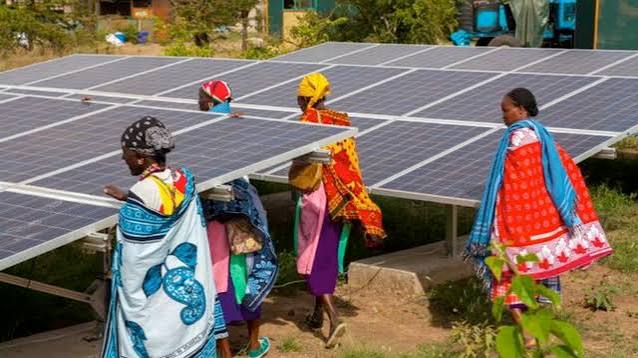
However, this future cannot rely on foreign aid or charity. Local entrepreneurship, women-led green enterprises, and youth innovation must be at the forefront. Already, startups like Solar Sisters are empowering women to become clean energy entrepreneurs, helping to democratize access and profits.
Conclusion
Africa is not energy poor—it is energy mismanaged. With one of the youngest populations globally, the continent must not just consume energy, but own its energy narrative. Solar energy represents a clean, decentralized, and inclusive solution to many of Africa’s most pressing problems. But the sun alone cannot power the future—vision, leadership, and collaboration must rise alongside it.
Africa stands at the threshold of a solar-powered renaissance. The real question isn’t whether solar is the answer, but whether African leaders and communities will be bold enough to act—before the world moves on and the sun sets on yet another missed opportunity.
NOAH AJARE ESQ
Great post,Thanks for sharing